Maciver family estrangement
Good Morning, Midnight (Reginald Hill Edition)The Maciver family estrangement was shaped by grief, contested guardianship, and a struggle over who could claim the family home. After Palinurus Maciver Senior died, Kay Kafka left with Helen Maciver, her young stepdaughter, while Palinurus Maciver Junior and Cressida Maciver regarded Kay with deep distrust. The breach lasted for years, separating the siblings from Helen and preserving an unresolved conflict that even later reconciliation could not erase.
The rupture after Palinurus Maciver Senior’s death
Cressida Maciver’s recollection presents the household’s break as a consequence of several losses and disputes arriving together. Kay Kafka left, taking Helen Maciver with her. Cressida believed that Palinurus Maciver Senior had loved Helen more than his older children, and that Kay’s close bond with the girl had given her considerable influence in the household. After the death, the will appointed Kay as guardian of nine-year-old Helen. Palinurus Maciver Junior was already an adult, and Cressida was close to adulthood, but Helen was legally dependent on Kay and wanted to remain with her.
The siblings’ hostility toward Kay also shaped how Helen understood her family. Helen remembered calling Kay her mother in her own mind, although Kay had asked her to use her name rather than that title. When Palinurus Maciver Junior and Cressida Maciver insisted that Kay was not their mother, Helen became distressed. Kay comforted her, acknowledged the distinction, and said she would act as a mother to the children if they would accept her. Helen did; her older siblings did not. The same relationship that gave Helen security thus became, for Palinurus Maciver Junior and Cressida Maciver, a source of separation and resentment.
The practical consequences were immediate. When Kay and Helen returned from America, they could not enter Moscow House. Helen was initially told that the law prevented access after a sudden death; she later learned that Palinurus Maciver Junior had changed the locks. The family instead moved through temporary accommodation: first a short stay with Tony Kafka in Cothersley, then a suite at the Golden Fleece Hotel arranged through Ash-Mac, followed by a town flat. After Kay and Tony Kafka married, the household moved to Cothersley Hall. Helen’s account makes clear that the siblings’ estrangement was not an abstract disagreement: it governed where she lived and who could enter the house she understood to be partly hers.
Guardianship and the dispute over Moscow House
Palinurus Maciver Junior wanted the conflict with Kay brought into the open, believing that his concerns could show she was unsuitable to raise Helen. He was advised that accusations without firm evidence could weaken his position. Instead, the family considered whether Kay might leave Britain or whether a future husband might not accept Helen. Kay’s marriage to Tony Kafka, his willingness to adopt Helen, their stated intention to remain in England, and their commitment to her education in Britain undercut those objections. Helen remained with Kay, and her older siblings had no legal means to change that arrangement.
Moscow House became the clearest continuing test of the family’s divided authority. Kay proposed putting it on the market. Although the will left the house to Palinurus Maciver Junior, Cressida Maciver, and Helen Maciver, Kay had power of attorney for Helen while serving as guardian. Cressida later thought she might have agreed to a sale, particularly because the house felt oppressive to her after her father’s death. Palinurus Maciver Junior refused. He considered it the family home and wanted it retained until all three siblings could decide as adults without Kay’s involvement. His opposition was therefore both a property decision and a refusal to let the guardianship dispute determine the family’s shared inheritance.
The position changed once Helen reached adulthood and married. She still wanted the house sold, and Palinurus Maciver Junior eventually dropped his objection. The siblings put Moscow House on the market, adjusting the price when it attracted little interest; each had to agree to the changes and sign. Cressida later noted that the long delay might not have been financially foolish, given the rise in property values. More important to the family relationship, the sale required practical cooperation among siblings who had once been separated by the very question of who had a right to the house.
Helen’s gradual return to her siblings
For years, Helen’s closeness to Kay coexisted with distance from Palinurus Maciver Junior and Cressida Maciver. After the funeral, the older siblings kept apart from Kay and Helen. Helen remembered them standing away and not looking toward the younger household. Their separation persisted even after Helen married Jason Dunn: Palinurus Maciver Junior and Cressida Maciver did not attend the wedding, though they sent a present.
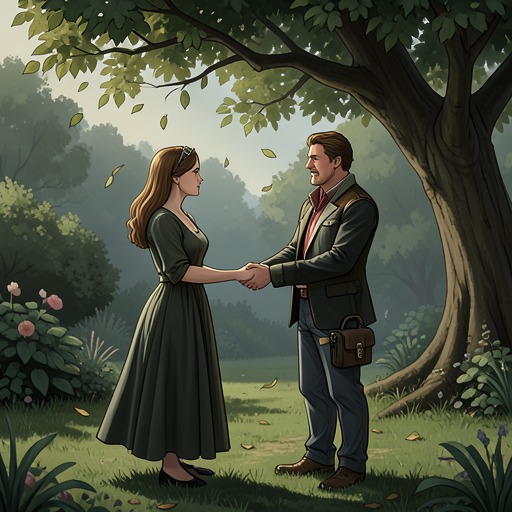
A chance meeting at the squash club began to alter that pattern. Jason Dunn, who disliked conflict, invited Palinurus Maciver Junior home to see Helen. Their first reunion was startling for Helen, but she found her brother willing to leave past grievances aside. He asked after Kay without criticizing her, a change Helen recognized as unusual. Kay supported the renewed contact, telling Helen that families should not remain apart, but declined Helen’s invitation to join a gathering with Palinurus Maciver Junior, his wife, and Cressida Maciver. She considered it important for Helen to rebuild those sibling relationships first, rather than making the reunion another confrontation involving Kay.
The gathering was imperfect but not a failure. Palinurus Maciver Junior and Jason Dunn got on well and began playing squash regularly. Palinurus Maciver Junior and Cressida Maciver also agreed that it might be time to sell Moscow House. Helen was expecting twins, and the anticipated additional expenses made the sale practically useful. The family’s reconnection therefore developed through specific acts of contact and cooperation—an invitation home, repeated games, and shared decisions—rather than through any account of the past being fully resolved.
Reconciliation without the end of suspicion
The improved relations remained uneven. Helen and Kay stayed close, while Cressida Maciver was largely apart from Kay. Cressida suspected that Palinurus Maciver Junior might have encountered Kay and knew how much anger he still felt when her name arose. Seeing Kay again after a long interval brought Cressida’s old distrust back sharply. She became convinced that Kay had some connection to her brother’s death, but this was Cressida’s conviction, not an established finding. Her account explicitly offered no definite explanation for Palinurus Maciver Junior’s state of mind or his imitation of his father’s death.
The news of Palinurus Maciver Junior’s death also made the older family loss immediate again. When Laurence Waverley told Lavinia Maciver that her nephew had died by suicide at Moscow House, he compared it to the death of her brother. Lavinia was stunned and asked whether she was needed; the shock briefly displaced the ordinary formality between her and Waverley. The parallel between the two deaths linked the siblings’ present grief to the history that had divided them, without resolving the suspicions surrounding either event.
The estrangement thus ends not in a complete family settlement but in partial repair under the pressure of fresh loss. Helen’s return to her siblings, the renewed friendship between Palinurus Maciver Junior and Jason Dunn, and the joint decision to sell the house all show that the old division had begun to loosen. Yet Cressida’s enduring distrust of Kay, and the family’s inability to explain Palinurus Maciver Junior’s death with certainty, leave reconciliation incomplete. The family could resume contact and make shared decisions; it could not simply recover a common version of what had happened.